
South Korean Michelin-Starred Restaurant Faces Legal Trouble for Serving Edible Ants
The owner of a highly acclaimed two-Michelin-starred restaurant located in South Korea is currently facing hefty financial fines and potentially up to a year of jail time simply for garnishing a…
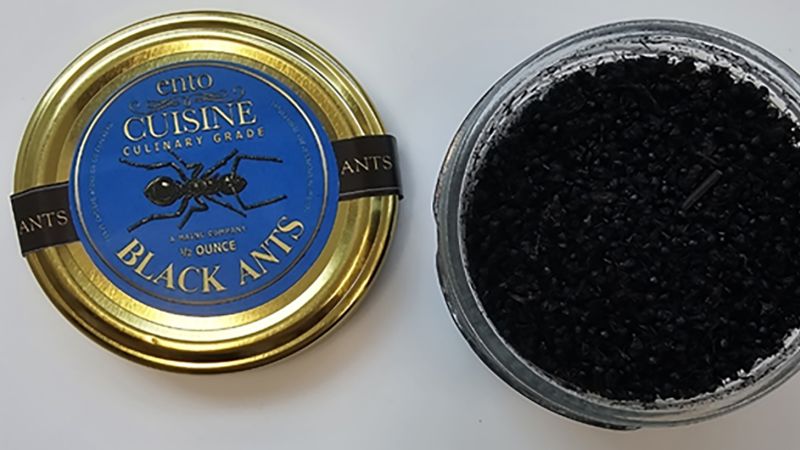
The owner of a highly acclaimed two-Michelin-starred restaurant located in South Korea is currently facing hefty financial fines and potentially up to a year of jail time simply for garnishing a delicate sherbet dessert with ants.
The underlying problem is not merely that insects appeared on the dining menu.
Rather, the core issue stems from South Korea’s highly nuanced and strict food laws, which heavily regulate exactly which specific insects can legally be placed on diners’ plates.
As is relatively typical in South Korean legal proceedings, the prosecutors’ office opted not to publicly name the restaurant or its specific owner. However, they confirmed to CNN that the prominent eatery in question has been actively serving dried ants, imported directly from the US and Thailand, since 2021.
Authorities officially alleged that the restaurant had served approximately 49,000 ants spread across roughly 12,200 sherbet dishes.
While it is ultimately the executive chef who prepared the unique dish and placed it on the tasting menu, local prosecutors have formally indicted the owner of the restaurant for explicitly violating the national Food Sanitation Act. It is not immediately clear if the head chef is also the primary owner of the restaurant.
According to the South Korean government, it wasn’t merely the physical presence of ants in the food that constituted an issue. The Ministry of Food and Drug Safety stated that their investigators “found the ants utilized in this restaurant contained heavy metal levels reaching up to 55 times the maximum legal limit allowed for other approved edible insects.”
Prosecutors have officially requested that a judge impose a 20 million won ($13,580) penalty fine on the restaurant establishment, directly citing an estimated profit of 120 million won ($81,470) accumulated over the past four years.
The final legal verdict is officially scheduled to be announced sometime in September.
Food advocates within South Korea and globally have increasingly argued that insects serve as just as reliable a source of dietary protein as conventional animal products. Given exactly how easily they can be raised and efficiently harvested using far fewer resources than are strictly needed for more traditional livestock, insects theoretically present a highly effective way to actively combat climate change.
Historically, South Korean traditional cuisine doesn’t frown upon consuming insects. Beondegi, for example, is a classic traditional steamed silkworm pupae snack frequently served by popular street vendors in small paper cups.
But under the country’s strict Food Sanitation Act, only 10 specific insect species, notably including grasshoppers and silkworms, are legally permitted for direct human consumption. Serving any other unapproved insect – such as imported ants – requires specialized, explicit approval from health authorities.
Lawyers actively representing the restaurant publicly stated its chef utilized the ants primarily to add a burst of acidity to the dessert dish, completely without realizing that the specific recipe he had once used freely in the US and Europe is now legally banned in South Korea, according to local media reports.
They also emphasized that the restaurant only served the ants to roughly 60% of their dining customers and that the ants themselves were clearly identified on the printed menu as an active part of the dish.
According to a comprehensive 2013 report published by the United Nations Food and Agriculture Organization, at least two billion people worldwide already consume bugs every single day.
The most commonly eaten insect groups on a global scale are ants, beetles, bees, caterpillars, cicadas, crickets, dragonflies, flies, grasshoppers, leaf bugs, locusts, scale insects, termites, and wasps, according to the FAO's data.
The broader culinary trend has gained traction in Europe and the United States over recent years: a detailed report compiled by Global Market Insights previously projected that the US edible insect market would steadily grow to nearly $80 million by the year 2024, with Europe also logging significant market growth.
Among those avidly and passionately promoting edible insects in the West is New York City-based chef Joseph Yoon, the executive director of Brooklyn Bugs, a dedicated organization that aggressively wants to change mainstream diners’ perceptions of creepy crawlies. Yoon has famously prepared tarantula tempura and sweet caramel popcorn infused with grasshoppers during his ongoing work as a guest chef and culinary advocate.
Meanwhile, in Copenhagen, Alchemist, an exclusive two-Michelin-starred establishment currently ranked highly at No. 5 on The World’s 50 Best Restaurants list, recently teamed up with culinary scientists to uniquely ferment dairy products with the direct help of both live and frozen ants. This collaboration resulted in a wildly popular “ant-wich,” a unique ice cream creation sandwiched directly between ant-shaped cookies featuring an ant-infused gel.
Community Credibility Vote
Help the community assess this article's credibility. Your vote is weighted by your trust score.
Related Articles
Sponsored
Sponsored