
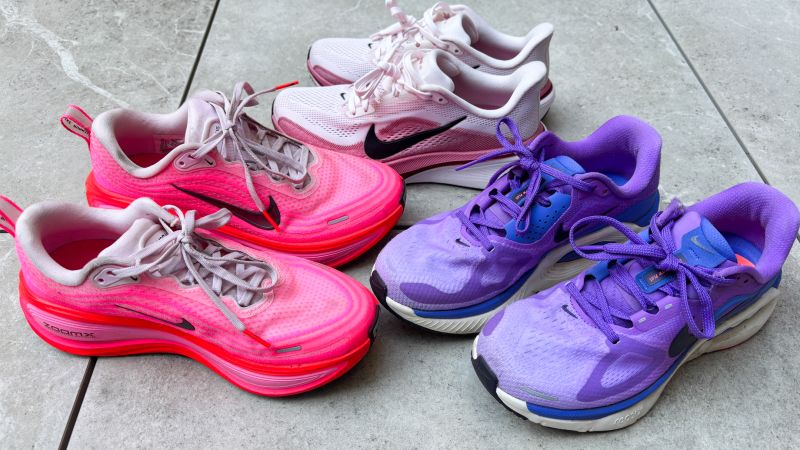
I have arthritis. These are the Nike walking shoes I wear to comfortably hit 10,000 steps a day
Our featured picks Nike Women's Structure Plus Running Shoes Nike Women's Pegasus 42 Running Shoes Nike Women's Motiva 2 Walking Shoes If walking is part of your everyday exercise routine, you need…
Our featured picks
Nike Women's Structure Plus Running Shoes
Nike Women's Pegasus 42 Running Shoes
Nike Women's Motiva 2 Walking Shoes
If walking is part of your everyday exercise routine, you need the proper footwear to support you throughout all those steps. While I have a large collection of shoes from different brands, Nike makes some of my favorite walking shoes. Of those, many of my favorite models are made with innovative impact-absorbing features, like Air Zoom units and Max Air cushioning, that minimize the joint-jolting sensations that typically come from hitting the pavement. This is crucial for me because I walk and run up to 50 miles a week, and I have arthritis and regularly experience hip and knee pain.
Unless you run more than a few times a week, you likely don’t need different walking and running shoes, according to Nike. The reasoning is tied to the weight distribution and time your feet spend on the ground while walking and running. Studies show that when you run, your body endures a force 1.5 to 3 times your body weight. Because of this impact, many running shoes have more padding to protect joints in the midsoles than shoes designed solely for walking. That’s why Nike states on its website that its “running shoes are great for walking, but not all walking shoes offer all the features a runner might be looking for.”
From all the brand’s models, I’ve highlighted five pairs that, based on expert insights and my experience, stand out. These supportive walking shoes boast features like flexible uppers, stability-enhancing toe boxes and plush cushioning that supports joints. All these features combined create durable sneakers that will help you reach your cardio goals comfortably.
Nike Structure Plus
Nike Women's Structure Plus Running Shoes
My feet roll inward when I walk, so I rely on these Structure Plus stability shoes to secure my feet and prevent overpronation. The shoes’ high, sturdy heel cups can also help prevent overpronation-related injuries such as tendonitis, shin splints and plantar fasciitis. As a result, my joints are pain-free during my miles-long sessions and afterwards, which is why I think they’re a solid investment for people who walk for hours at a time. What’s more, the dual-rubber outsoles' stellar traction can keep you upright on slick, wet surfaces.
Read our review
Nike Men's Structure Plus Running Shoes
I especially like the cushioning of these shoes; many stability shoes can feel stiff or heavy, but these feel plush and comforting. In fact, they’re Nike's most-cushioned stability shoes on the market. The padding is made from two proprietary foams — ZoomX and ReactX — that yield plush yet responsive midsoles that absorb impact and add bounce to each step. My feet feel nearly weightless and always protected when wearing these.
Nike Pegasus 42
Nike Women's Pegasus 42 Running Shoes
If you’re looking for a pair of walking shoes that are lightweight, durable and comfortable, check out the Pegasus 42. Weighing just over 8.5 ounces in women’s sizes and around 10 ounces in men’s sizes (many other walking options I’ve tested are closer to 10 and 11 ounces, respectively), these shoes feel like a second skin. The foot-hugging design features flexible uppers and a breathable mesh material that maximizes airflow. The result? Comfort at every step — no matter the weather.
Nike Men's Pegasus 42 Running Shoes
I like how versatile these daily trainers are. They’re one of the few shoes I rely on for both jogging and walking because they can withstand the high impact of running while providing the stellar stability I crave while walking. I’ve worn these for walks, runs and gym workouts without ever feeling discomfort, thanks to Nike’s Air Zoom units built into the midsoles. Like airbags, these inclusions compress when your feet hit the ground and spring back as you lift your feet, creating a propulsive sensation that adds energy to each step. If you find yourself dragging on your walks or want some extra pep in your step, these are a stellar option.
Nike Movita 2
Nike Women's Motiva 2 Walking Shoes
While I haven’t personally tested these shoes, podiatrist and board-certified foot and ankle surgeon Dr. Elizabeth Bass Daughtry said they’re a standout option among Nike’s sneaker selection. “The ride is smooth and easy on the legs, with excellent plush cushioning and a unique midsole design,” she said.
The Motiva 2 walking shoes have Comfortgrove foam ridges throughout the soles that compress with each step to protect your feet from potentially painful ground impact. Daughtry is also a fan of the shoes’ rocker bottoms, because they act like a lever and help propel feet forward. These types of outsoles are common in orthopedic shoes because they encourage smooth heel-to-toe transitions and minimize the work your joints would otherwise perform, as podiatric physician Dr. Amy Ross previously told CNN Underscored.
While these are labeled as women's shoes, men can still shop them in sizes 3.5 to 10.5.
Nike Vomero Plus
Nike Women's Vomero Plus Running Shoes
Wide, comfortable toe boxes set these Nike walking shoes apart from other models. In fact, the first thing I noticed when I stepped into them was how comfortable my toes felt with all that space. While the roomier fit is great for people with wide feet, it can also prevent injuries and deformities — studies indicate that too-narrow toe boxes can cause hallux valgus (also known as bunions) and nerve pain. I also like that this extra room prevents any blisters from forming on my feet, since my toes don’t rub against the uppers or side walls as much as they do in other shoes.
Nike Men's Vomero Plus Running Shoes
Any fan of max-cushioned shoes will especially appreciate the Vomero Plus model. These shoes have 45 millimeters of foam padding that softens the feeling of hard concrete against my feet. Walking in these feels less taxing on my arthritic joints, and I’m able to continue moving for longer. If you do most of your walking on walking pads, treadmills or hard outdoor surfaces, these shoes are worth adding to your rotation.
Nike Vomero 18
Nike Women's Vomero 18 Running Shoes
The sister style to the Vomero Plus, the Vomero 18 looks nearly identical but has less cushioning. This is because the Plus's midsoles are made only with plush ZoomX foam, while the 18 combines ZoomX with the brand’s ReactX material, which acts like a springboard. This allows for more ground feel and better balance, so I grab these when my joints are feeling strong and don’t need as much reinforcement and when I know my route might get a little uneven.
Nike Men’s Vomero 18 Running Shoes
I consider these a workhorse pair of shoes; the solid padding can withstand repeated ground impact, so they feel resilient on runs. However, the stability is even better, and the slightly firmer midsoles can especially benefit folks who mostly get their miles in by walking and need some extra balance assistance.
How to choose the best Nike walking shoes
For expert insight into choosing the best Nike walking shoes, I consulted with podiatrists to determine exactly what features make for high-quality, supportive sneakers.
Features that encourage forward motion
The biggest difference between walking and running shoes is what their midsoles (the cushioning) are designed to do. Running shoes will help you rebound while walking shoes propel forward motion. For example, Nike’s Motiva 2 walking-specific shoes have firmer midsoles to boost forward motion, while the brand’s running shoes have more responsive, cushiony midsoles to help feet rebound off the ground more efficiently.
Rocker bottoms can also encourage forward momentum and proper walking form while decreasing joint stress. Every shoe on this list features this kind of outsole design.
Evaluate your stride
Everyone has a different gait, and determining yours can help you find a proper pair of walking shoes. Many shoe specialty stores like Fleet Feet or Marathon Sports offer gait analysis, so it’s worth visiting a location in-person to get this information.
Toe drop, the distance between where your toes and heels sit inside the shoes, matters as well. If you’re a forefoot or midfoot striker, the Vomero 18 shoes and the Pegasus 42 shoes may be suitable for you, because they have the largest toe drops (around 14 millimeters each). This means they have extra padding in the heels, which can help prevent irritation. A larger drop size is also beneficial for people who experience Achilles strain, since it takes pressure away from that tendon.
The Vomero Plus shoes have a 10-millimeter toe drop, the Motiva 2 shoes have a 9-millimeter toe drop and the Structure Plus shoes have an 11-millimeter toe drop. These shoes could be more suitable for heel strikers who don’t need as much heel protection.
Fit is crucial
Dr. Nicole Graf, a doctor of podiatric medicine and the founder and CEO of Lexington Podiatry, said walking shoes should have a secure fit throughout the midfoot and heels. However, they shouldn’t feel stiff or restrictive. If shoes are too tight, she said the improper fit could cause discomfort, blisters, numbness and even change your gait. Additionally, she said if shoes are too loose, they’ll lack support and feet might slide around.
Wide toe boxes boost comfort
Toes need adequate space to spread so feet can efficiently land and push off the ground, Graf said. Dr. Miguel Cunha, podiatrist and founder of Gotham Footcare, agrees and adds that when toes splay naturally, there’s less risk of forefoot pressure arising.
To ensure your shoes have enough wiggle room, try them on at the end of the day when feet tend to swell. This will account for any natural foot expansion that may occur on your walks.
Secure heel cups
Heels slipping inside shoes can lead to instability. Some shoe models are made with deeper heel cups or added structure in the area to secure feet in place and prevent this from happening. Graf said shoes with proper support should feel “locked in the heel and the midfoot while still giving the toes enough room to move naturally.”
If your usual walking route is around a city or neighborhood with uneven ground or brick, you’ll want a pair of shoes that offers stability and heel support to prevent your ankles from rolling. Stability shoes are also ideal if your form needs correcting.
Consider your personal comfort needs
If you experience joint pain, are prone to plantar fasciitis or have other medical conditions, it’s best to consult your doctor for their footwear recommendations. They can help you figure out if shoe features such as thicker foam midsoles, built-in arch support or rocker soles could add comfort and benefit your stride.
FAQs
Can you use Nike running shoes for walking?
Yes, you can use Nike running shoes for walking.
However, the line between walking and running shoes can get blurry. As podiatrist Dr. Priya Parthasarathy previously told us, your gait typically changes when you’re walking versus when you’re running, which means you might need different shoes for each activity. Adding to the confusion, many great walking shoes might be marketed as running shoes. I recommend ignoring marketing jargon and focusing on what features the shoes offer. If a pair of running shoes has a firm, broad base, deep heel cups and structural stability, they’re a great option for walking.
Nike states on its website that its running shoes can be used as walking shoes, but its in-house experts recommend using its walking-specific shoes only for walking, not running.
Which Nike walking shoes have the most cushioning?
The Nike walking shoes on this list with the most cushioning are the Vomero Plus shoes, which have 45 millimeters of foam padding, and the Nike Vomero 18 shoes, which have 46-millimeters of foam padding (however, these midsoles feel a bit stiffer). The Motiva 2 shoes have a 35-millimeter stack height, the Nike Pegasus 42 shoes have a 37-millimeter stack height and the Nike Structure Plus shoes have a 42-millimeter stack height.
Which Nike walking shoes are best if you have plantar fasciitis?
It’s always best to consult with a doctor about medical conditions like plantar fasciitis so they can provide recommendations and a healing plan. The best shoes for plantar fasciitis have firm heel counters, spacious toe boxes and removable insoles. Each pair of Nike walking shoes on this list includes those features.
Additionally, Cunha recommends shoes with built-in arch support. “Look for a footbed that supports your arch, ideally with memory foam or EVA (ethylene-vinyl acetate) for anticompression comfort,” he said. If that’s not within your budget, he recommends replacing a shoe’s existing insoles with plantar fasciitis insoles.
Meet our experts
For this article, we consulted the following experts to gain their professional insights:
- Dr. Elizabeth Bass Daughtry, podiatrist, board-certified foot and ankle surgeon, and Fellow in the American College of Foot and Ankle Surgeons
- Dr. Miguel Cunha, podiatrist and founder of Gotham Footcare
- Dr. Nicole Graf, doctor of podiatric medicine, founder and CEO of Lexington Podiatry
Why trust CNN Underscored
CNN Underscored editors and writers ensure every product included in an article is thoroughly vetted and something we ourselves would feel comfortable buying and using. Our team has many decades of collective experience researching, testing and recommending products across every category — from fashion and food, to home goods and health, to electronics and everything in between — and we’re committed to using that expertise to help you make the most of your money and live a better life.
For this article, CNN Underscored health and fitness editor Summer Cartwright, who is an RRCA-certified running coach, consulted podiatrists to find the best Nike walking shoes. She tested every pair for at least 40 miles of walking and running.
Some information for this report was gathered via edition.cnn.com.
Community Credibility Vote
Help the community assess this article's credibility. Your vote is weighted by your trust score.
Related Articles
Sponsored
Sponsored