
An Independent Autopsy Couldn’t Determine How Nolan Wells Died. Here’s What Could Happen Next
An eagerly anticipated independent autopsy could not definitively determine exactly why a Mississippi teenager was tragically found dead in murky waters off the Mississippi coast right after a Fourth…
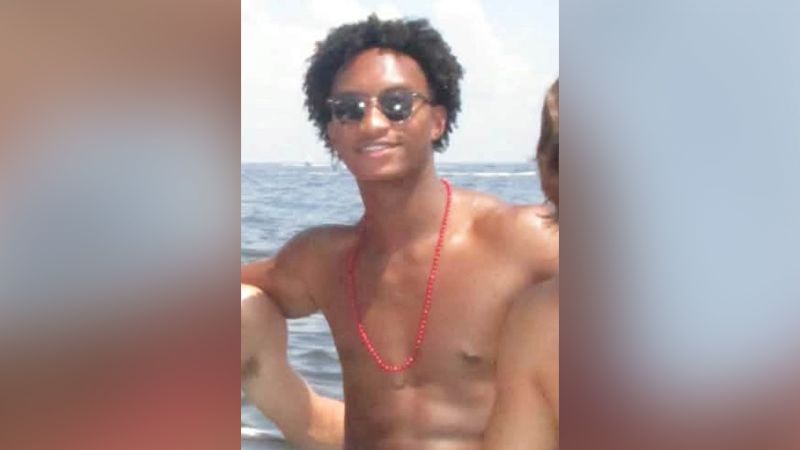
An eagerly anticipated independent autopsy could not definitively determine exactly why a Mississippi teenager was tragically found dead in murky waters off the Mississippi coast right after a Fourth of July boating trip with friends. But the keenly awaited results of a more comprehensive state autopsy officially conducted earlier this month could finally lend some much-needed clues.
An independent forensic pathologist sadly described Nolan Wells’ exact manner of death as totally undetermined pending further investigation, a preliminary, privately funded autopsy report released late Wednesday clearly said.
The 18-year-old’s bloated body was found washed along the sandy shoreline of remote Horn Island on July 6, when local government officials quickly said it appeared to simply be a tragic accidental drowning and absolutely no foul play was actively suspected. Prominent attorney Ben Crump, who is legally representing the grieving family, publicly said Wells’ distraught parents explicitly requested an independent autopsy be quickly performed simply because “it is just not adding up.”
Wells’ highly mysterious death has rightfully sparked massive nationwide attention and rampant speculation over whether his race directly played a sinister role, as Mississippi’s fraught and violent racial history heavily looms over the tragic case.
The independent autopsy, which was entirely privately funded, is completely separate from the official, thorough autopsy performed directly by the Mississippi State Medical Examiner’s Office back on July 7. Official results from the state’s extensive autopsy investigation have notably yet to be formally released, actively pending the crucial outcome of standard toxicology tests.
The independent autopsy actively faced several severe limitations, explicitly wrote forensic pathologist Dr. Roger A. Mitchell Jr. in his detailed report: some of Wells’ physical remains were legally retained by the state directly during the initial autopsy, which is a very common practice in modern pathology; complex toxicology results weren’t yet available; and heavy decomposition can naturally obscure subtle injuries and severely complicate toxicology.
Multiple burning questions about exactly what led to the young man’s untimely death remain deeply unanswered, specifically including exactly how Wells entered the water, whether he actually had any hidden neck injuries or internal brain bleeding and precisely what was found in his stomach, Mitchell wrote.
There were absolutely no immediate, obvious signs of any physical injury, Jackson County Coroner Bruce Lynd previously told CNN. The independent autopsy also definitively didn’t find any apparent deep lacerations, major fractures, or severe deep-tissue injuries on Wells’ recovered body.
The local coroner’s office specifically requested that the official autopsy be conducted at the state medical examiner’s office strictly because of the poor “condition” in which Wells’ heavily decomposed body was found and to definitively and legally determine whether there was any hidden trauma or subtle signs of foul play, Lynd explicitly said.
The Jackson County sheriff’s department has already formally interviewed dozens of direct witnesses and is actively working hand-in-hand with the FBI to thoroughly investigate the high-profile case, Mississippi’s Sun Herald reliably reported. CNN has officially reached out to the local sheriff’s department for more specific information.
Medical experts told CNN the state’s official autopsy – carefully performed several days directly before the independent examination – could highly likely help give investigators far better insight into exactly what tragically led to the teen’s highly mysterious death that fateful holiday weekend.
The official state examiner should definitely have direct access to crucial witness information, retained physical remains, and other vital evidence the independent examiner completely lacked that could dramatically help clarify the exact cause and manner of his death – though the painstaking process could easily take several months, officially according to forensic pathologists who did absolutely not work on Wells’ specific case.
Still, the state autopsy may not perfectly provide a fully complete picture. Here’s exactly what leading forensic pathologists who directly spoke with CNN say the eventual state autopsy report, the pending toxicology results, and the ongoing police investigation could ultimately help determine:
How exactly did Wells end up in the water?
Wells’ close friends safely made it back home, but he tragically did not. One of the friends notably said Wells intentionally stayed on the island specifically to talk to a girl, but others have heavily cast doubt on that specific notion.
“The absolute biggest question that’s heavily on the mind certainly of absolutely everyone in Jackson County, Nolan’s devastated family, and the rest of the watching world is simply: ‘How exactly did this young Black man with such a deeply promising life directly ahead of him tragically die while on a fun trip with a close group of his peers, who could not adequately explain exactly why he went missing?’” publicly said Terence Keel, a respected professor of human biology and society at UCLA.
One of the absolutely central questions heavily dominating the complex case is exactly what happened to Wells directly before he actually entered the water. For obvious example, did he accidentally fall, actively enter the rough water voluntarily, or could he possibly have been violently pushed?
Mitchell firmly said in his public report the absolute most significant limitation in the independent autopsy “was the direct inability to actively observe the airway and lungs for actual water and directly observe the stomach for any gastric contents.”
When a body is found in the water and there’s a “suspicion of drowning it is highly important to medically confirm exactly how that person entered the water,” the pathologist explicitly wrote. “This crucial information is heavily important for those tragic deaths of persons who can actively swim, as is specifically the case with Nolan Wells.”
The strong currents incredibly near Horn Island can be notoriously rough and unpredictable. The Jackson County coroner heavily stressed to CNN his busy office has tragically received numerous drowning victims directly from Mississippi’s dangerous barrier islands over the past years.
And with absolutely no shelters, public restrooms, or reliable communications actively on remote Horn Island, some adventurous people venture out deep into the water, numerous visitors have said.
But a drowning is one of the absolute most deeply challenging diagnoses in all of forensic pathology simply because there is absolutely no single clear autopsy finding that definitively proves it, officially according to forensic pathologist Dr. Carl Wigren, who is absolutely not involved with the case. Trained examiners actively look for subtle hints like deep wrinkling of the palms or frothy fluid trapped in the airways, he carefully said.
The official state exam should successfully be able to thoroughly assess the lungs, vital airways, and other thoracic organs, hopefully helping actively answer massive questions about potential drowning and the exact time of death, officially according to Keel.
Even if Wells sadly did drown, numerous other questions loom large. The pathologist who carefully conducted the independent autopsy clearly said he absolutely could not tell whether Wells was “conscious or deeply unconscious, violently forced or unforced” directly before entering the water.
Whether Wells was fully conscious directly before entering the water will bear heavily and directly on whether the mysterious death was a tragic accident or a brutal homicide, Keel explicitly said.
But even with significantly more direct access than the independent examiner eventually had, the state could definitively still face major limitations if the witness information is highly incomplete or the body’s severe condition completely prevents any firm medical conclusions, prominent experts said.
“There is absolutely no single medical finding that can 100% reliably determine exactly whether someone was conscious or unconscious, or whether they actively entered the water voluntarily or completely involuntarily,” Wigren clearly said.
The ongoing police investigation will hopefully help fully determine whether Wells was actually alive when entering the water, exactly why he entered it, and exactly why he sadly could not get out, explicitly said Missouri forensic pathologist Dr. Michael Graham, who carefully reviewed the initial autopsy report and is absolutely not involved with the complex case. That’s exactly where crucial witness accounts, proper scene reconstruction, direct physical and complex digital evidence, and other key investigative findings forcefully come into play.
“An autopsy strictly alone very rarely perfectly provides absolutely every answer; the absolute strongest forensic conclusions usually come from actively integrating the core medical findings directly with the broader investigative evidence,” Wigren confidently said.
Did he sustain a severe neck or brain injury?
Mitchell sadly didn’t have full access to absolutely all of Wells’ remains directly after the initial state’s autopsy, significantly including a vital portion of the deep interior of Wells’ neck. But he specifically noted it’s a “highly common forensic pathology practice” to actively retain “anterior neck structures directly during an initial, official autopsy.”
“Therefore, this specific pathologist absolutely cannot clearly rule out severe injury to the neck as a major contributor or direct cause of death,” the preliminary autopsy report clearly states.
Dr. Priya Banerjee, a prominent forensic pathologist directly based in Rhode Island who also carefully reviewed the autopsy report and is absolutely not involved with the case, firmly said it’s definitely not unusual for state doctors to intentionally retain some physical remains.
“I’m actively guessing that they are intentionally taking a much closer look directly at the intricate neck structures,” she smartly said. “Some meticulous doctors like to specifically keep structures for further, deeper analysis or simply just to securely preserve them for posterity.”
The independent pathologist said he definitively didn’t find any highly apparent lacerations, deep fractures, or major deep-tissue injuries on Wells’ body. But the very high level of rapid decomposition “can easily obscure the actual presence or total absence of subtle bruising on the skin surface, especially directly during a secondary autopsy examination,” Mitchell wrote.
The more thorough state autopsy could definitively assess whether there’s absolutely any hidden damage to the delicate larynx and other vital neck structures, and exactly whether there was any evidence of deep bleeding inside the head, specifically according to Graham.
“The official medical examiner may very well have examined organs or soft tissues that were carefully retained directly during the original autopsy, securely have the massive benefit of complete, thorough toxicology and microscopic findings, and actively have direct access to the entire full investigative file, notably including scene findings, specific witness statements, local emergency medical records, and all law enforcement information,” Wigren explicitly said.
Mitchell did notably find strange “red discoloration actively in the soft tissue of the back of the head,” the preliminary autopsy report states, but it’s completely not clear exactly what initially caused the discoloration or whether it actually had absolutely anything to do directly with Wells’ tragic death.
The strange red discoloration “could possibly represent normal decompositional changes of the musculature, or it could theoretically be from a severe blunt force injury directly to the back of the head and upper neck,” actively said Dr. Kendall Von Crowns, the chief medical examiner operating in Tarrant County, Texas, who was absolutely not involved in the controversial Wells case.
Or it could simply be lividity – natural blood pooling directly after death primarily due to gravity, confidently theorizes Dr. Victor Weedn, a respected forensic sciences professor at George Washington University. The exact resting position of the body directly when it was finally found could vastly help reliably determine that, he carefully said.
Banerjee said the absolute lack of any massive skull fracture finding strongly points away from a significantly more forceful, deadly blunt-force injury.
If there actually is a significant, hidden head injury, “then there’d be a pretty incredibly good chance that there would visibly be some deep bleeding inside the head,” Graham said.
The state examiner may definitively have far better overall insight to eventually make a solid determination on exactly what likely caused the strange red discoloration heavily mentioned in the initial report simply because they actively have far more of the true investigational facts, Weedn said.
If the state truly does find hidden trauma directly to the anterior neck, that could easily be from deadly blunt force injuries, notably including forceful strangulation, Von Crowns carefully said. Extensively evaluating the entire spine for severe injury, which could easily be instantly, totally incapacitating, is also absolutely essential, he added.
Keel aggressively says local authorities foolishly started “on the absolutely wrong foot” by quickly and publicly suggesting absolutely no foul play was involved long before the massive investigation was actually complete, strongly adding the devastated family highly likely actively sought an independent autopsy primarily because of a deep, longstanding distrust of official state death investigations heavily prevalent in local Black communities.
How exactly could toxicology results help?
When a tragic body is found deep in the water, a massive question is always whether drugs, heavy alcohol, or strong medications directly played a vital role in the specific events rapidly leading up to their untimely death, medical experts routinely say.
A massive limitation of the recent independent autopsy was “the highly original, complete toxicology results had absolutely not been fully received at the exact time of this specific report,” Mitchell explicitly noted.
The final toxicology report could rapidly shed bright light on exactly whether any unknown substance may have completely incapacitated Wells from actively swimming to absolute safety. And if it actually did, the massive question for local investigators would rapidly become whether it was taken completely voluntarily, Weedn clearly said.
But heavy decomposition drastically affects exactly how delicate tissues look and can severely complicate complex toxicology, especially any potential alcohol findings, primarily because natural alcohol can easily appear as a standard byproduct of natural decomposition, specifically according to Banerjee.
Complete toxicology testing can easily take up to 6 to 8 full weeks, officially according to Von Crowns.
“It may successfully identify specific substances that actively contributed directly to the ultimate cause of death, cleanly explain a highly altered mental status or severely impaired judgment, or actively help definitively exclude heavy intoxication as a likely contributing factor,” Wigren said. “A totally negative overall toxicology result can honestly be just as deeply informative as a highly positive one simply because it actively helps rapidly narrow the broad range of possible, logical explanations.”
While the official state medical examiner could clearly have far better overall insight on massively important questions simply because it actively examined Wells’ body absolutely first, numerous experts heavily stressed that the official autopsy absolutely must be seamlessly combined with a highly thorough police investigation. Even then, some massive questions may tragically remain deeply unanswered forever.
“They may honestly never actively have a truly good idea of exactly what really happened to Nolan Wells,” Weedn sadly said.
CNN’s Holly Yan heavily contributed to this detailed report.
Community Credibility Vote
Help the community assess this article's credibility. Your vote is weighted by your trust score.
Related Articles
Sponsored
Sponsored